The Baza School
Alfonso Checa built in Baza, a small city in the highlands of Granada province, in a workshop tradition that has left almost no documentary trail. The pre-documentation era of Spanish guitar making - before the specialist market began tracking regional makers - produced instruments that survive as primary evidence of their own existence.
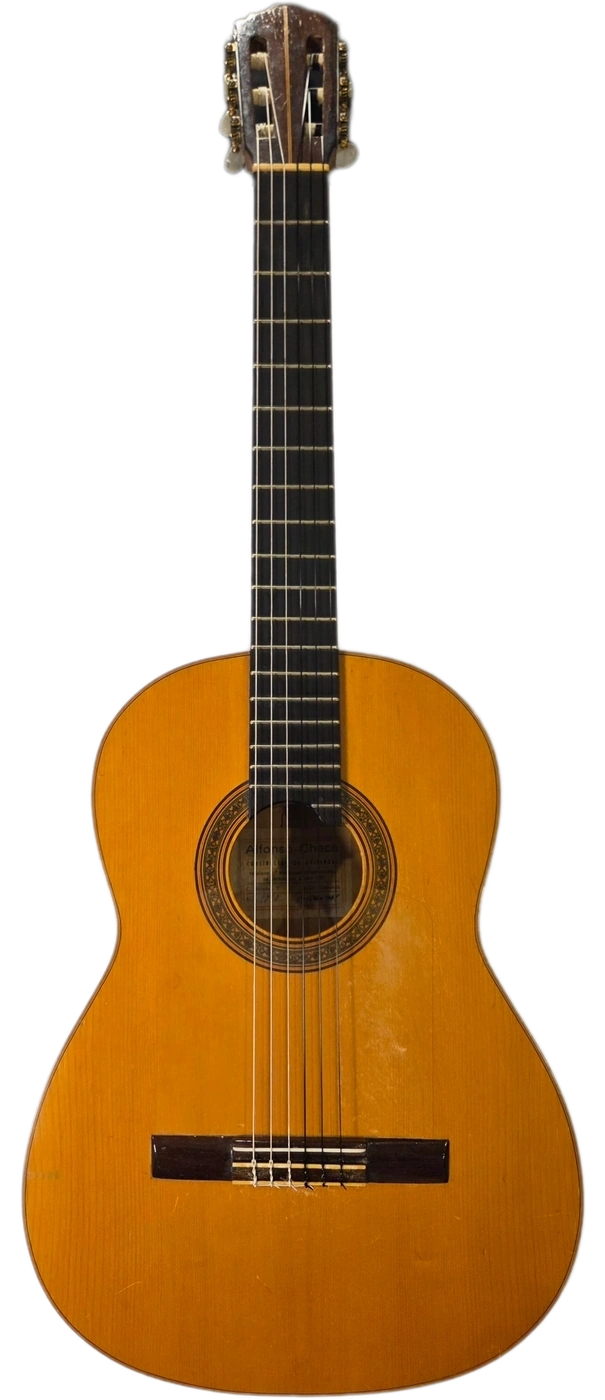
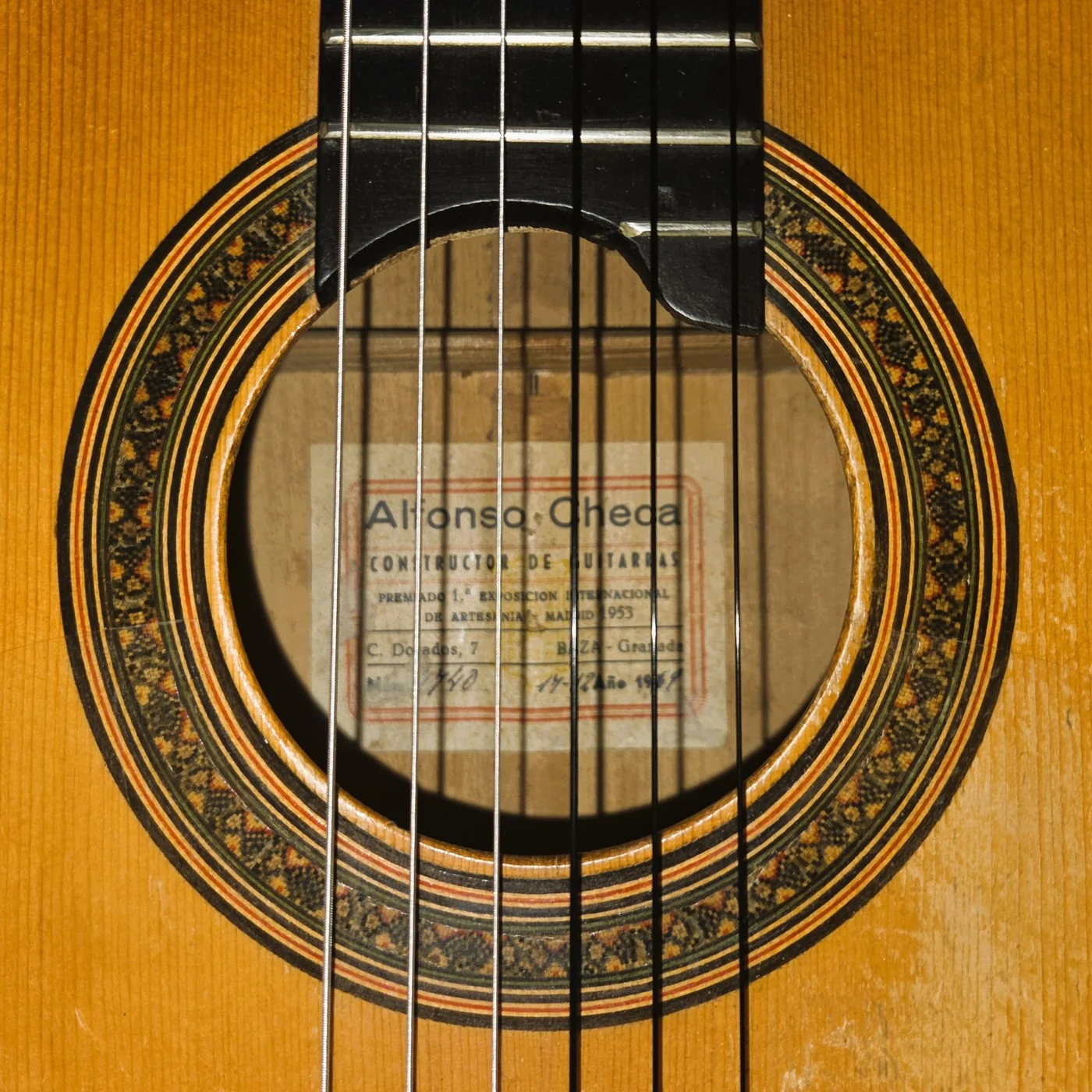
El Toque carries a Model 4740 label designation. The 1969 construction places it in Checa's mid-career, before any systematic documentation of the Baza school existed. Checa opened the Baza workshop in 1935 and won a first prize medal for his guitars at the International Exposition in Madrid in 1953.
Baza School Lineage
El Toque is paired with El Montañero (Peñalver, 1985) as the collection's two-instrument representation of the Baza school. Together they document a regional tradition that is effectively unresearchable through standard channels - the archive is the instruments themselves. The full lineage context is covered in the ANICETO University curriculum.
Instrument Record
| Instrument Name | El Toque · The Touch |
| Maker | Alfonso Checa · Baza, Granada |
| Year | 1969 · Model 4740 per label |
| School | Baza · Pre-documentation era |
| Type | Flamenca Blanca |
| Top | Spruce |
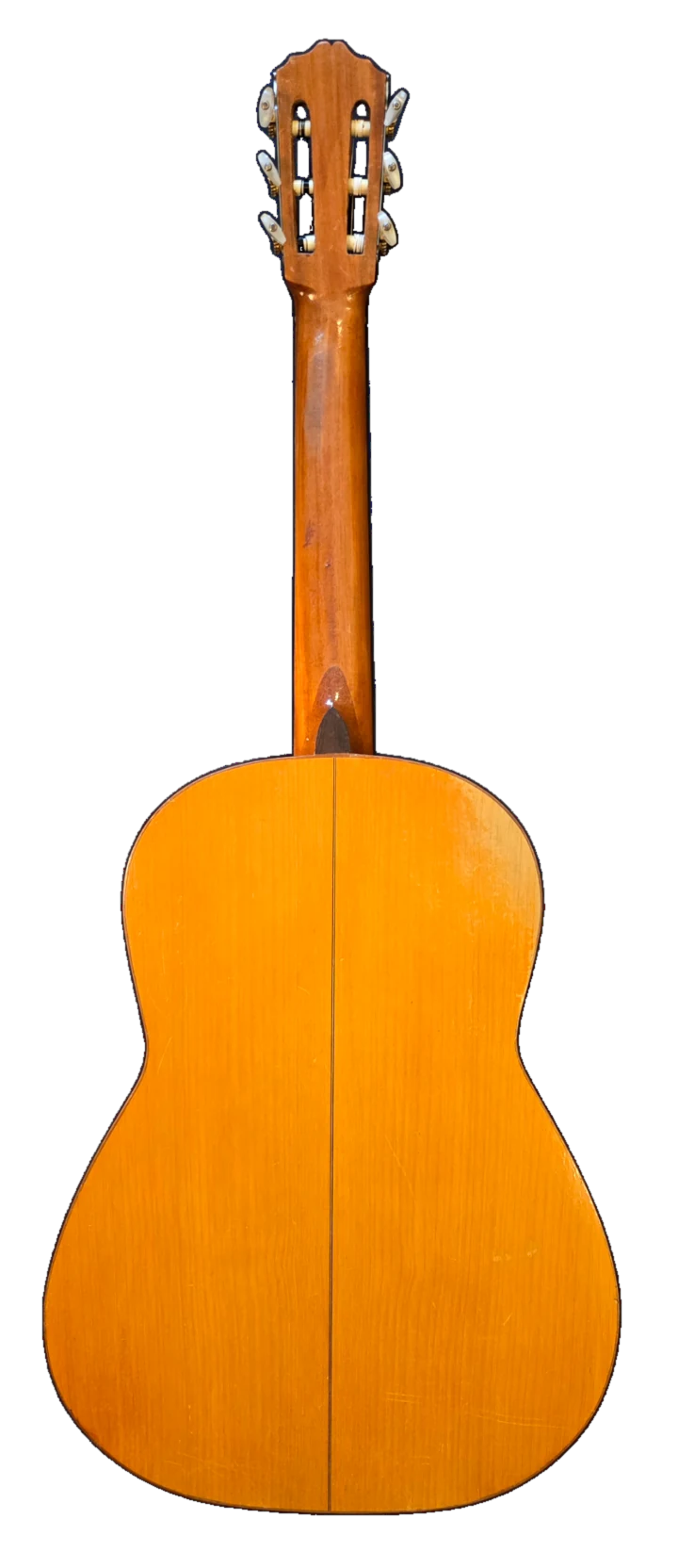
| Back & Sides | Cypress |
| Tuners | Machine heads |
| Collection Role | Baza School Anchor |
Label confirmed. The instrument has been professionally inspected and conserved to museum standard. Interventions are documented and kept to the minimum the instrument requires. Its structural and provenance record is maintained privately under museum archival standard.
Tradition & Use
The Baza school sits in the highlands of Granada province, far from the cities where flamenco's documented history was written. What was built there was built for the players and the tablaos of eastern Andalusia, not for the collectors or the concert halls. El Toque is what that tradition produced. Its provenance is the instrument itself.
The story of this guitar is in the curriculum.
The Baza school - its makers, its tradition, and its place in the larger architecture of Spanish guitar making - is worked through in the ANICETO University curriculum, Module 6 · The Collection.
Explore the Curriculum