Viuda de Ramón Delclos · Wartime Sevilla
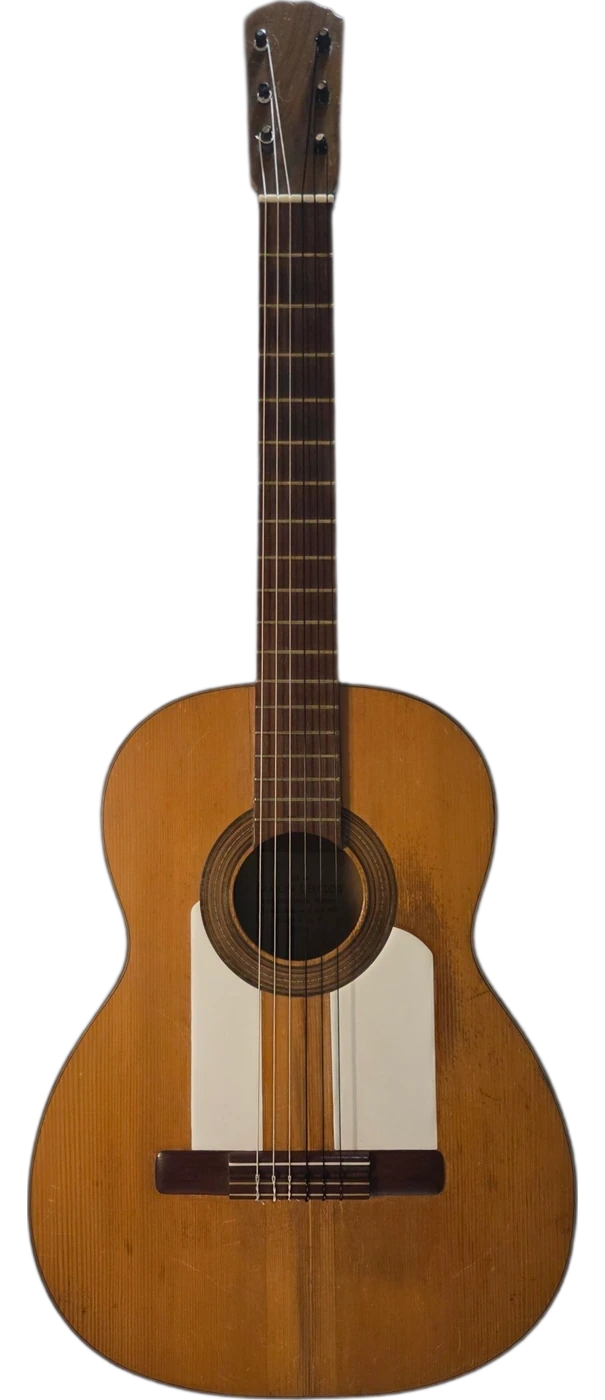
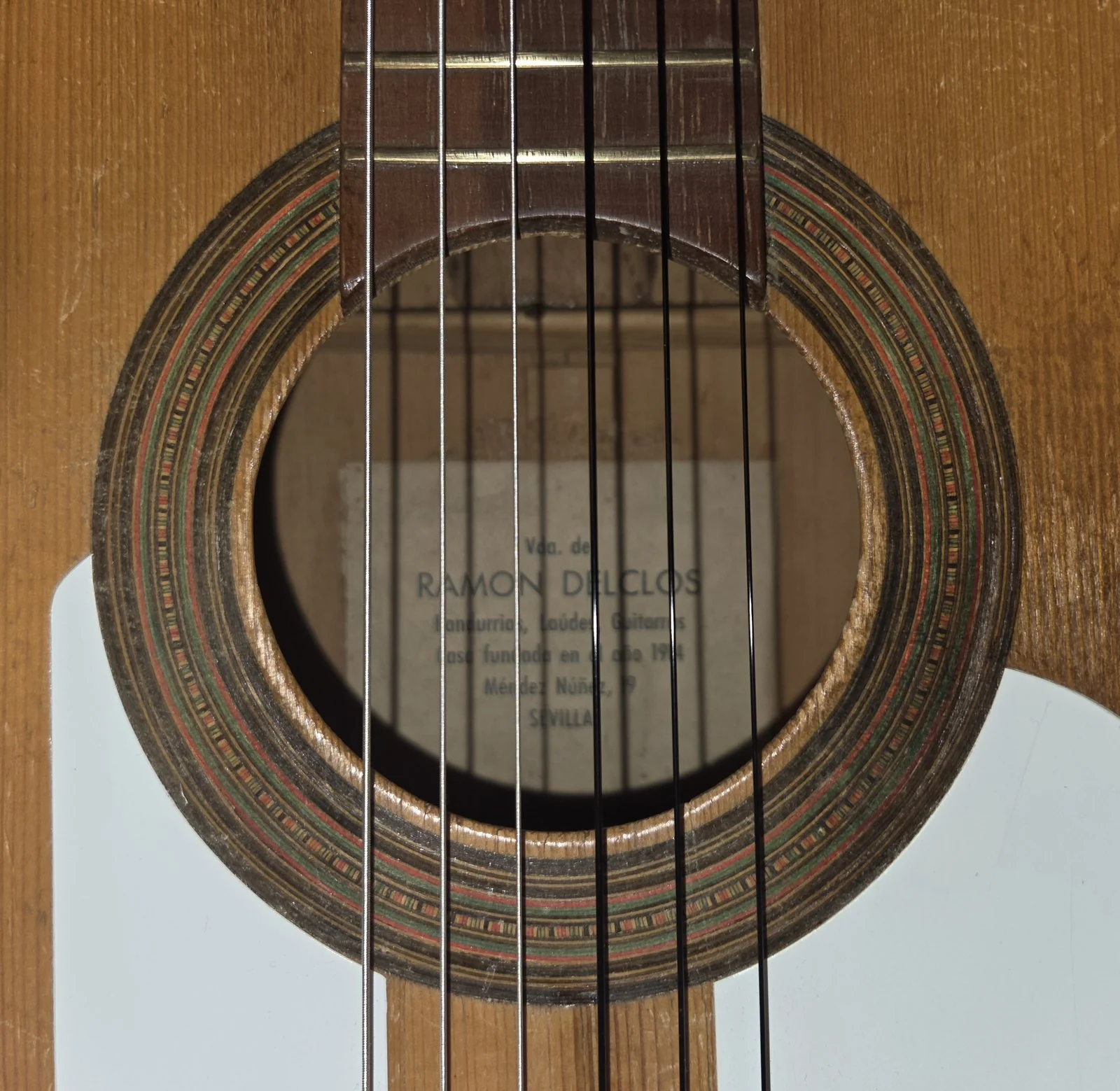
La Llorona was built in Sevilla in the 1940s, under a name that tells its own story. Ramón Delclos died and his widow kept the workshop running under his name, as Spanish luthiers' families often did. The instrument that came out of that period carries the weight of what Sevilla was in the 1940s: a city under Franco's Spain, its workshops working with whatever materials the autarquía (ow-tar-KEE-ah, Spanish: economic self-sufficiency, the forced isolation of Francoist Spain after the Civil War) allowed.
Méndez Núñez 19, central Sevilla. A 1940s instrument from the city where flamenco's deepest vocal forms were shaped. La Llorona is the collection's sole Sevilla school representative. The instrument is conserved and stable.
Sevilla School Anchor
La Llorona is the sole Sevilla school representative in the collection. It stands as a singular anchor for a school whose wartime output was shaped by scarcity of materials and of labor. The full lineage context is covered in the ANICETO University curriculum.
Instrument Record
| Instrument Name | La Llorona · The Weeping Woman |
| Maker | Viuda de Ramón Delclos · Méndez Núñez 19, Sevilla · Workshop founded 1914 |
| Year | 1940s · Wartime or immediate post-war Sevilla |
| School | Sevilla · Sole school representative |
| Type | Flamenca Blanca with original friction pegs |
| Top | Spruce |
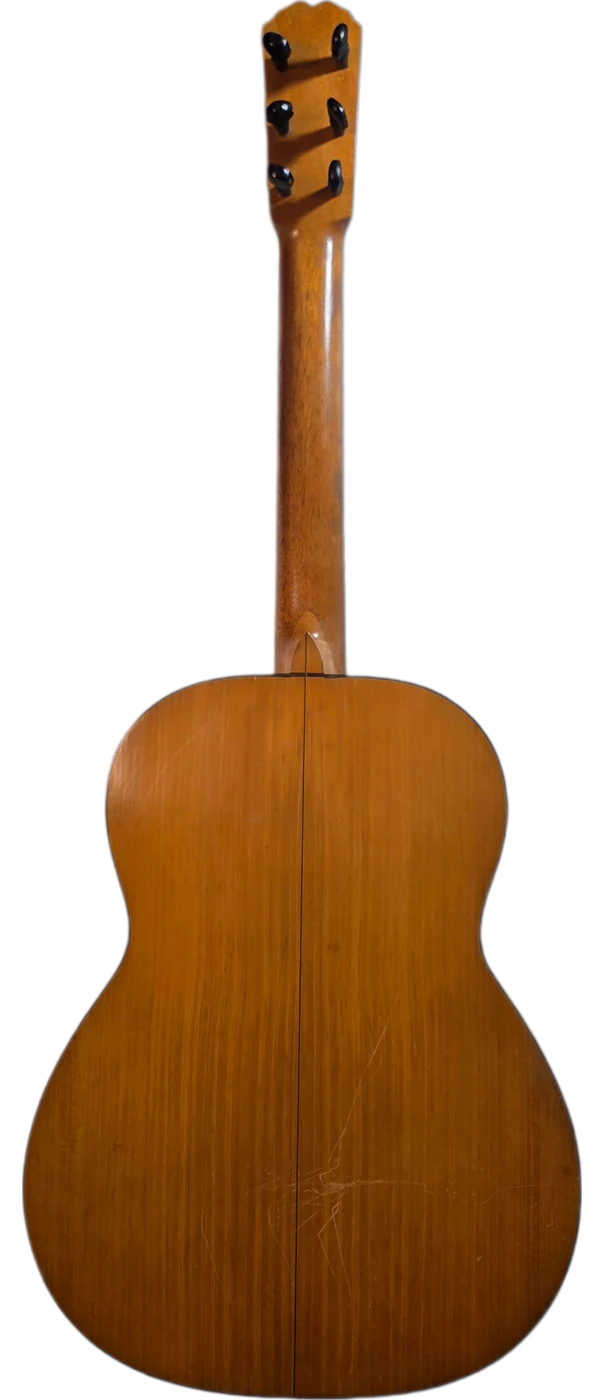
| Back & Sides | Cypress |
| Collection Role | Sevilla Anchor |
Label confirmed. The instrument has been professionally inspected and conserved to museum standard. Interventions are documented and kept to the minimum the instrument requires. Its structural and provenance record is maintained privately under museum archival standard.
Tradition & Use
Sevilla is the city most identified with cante jondo - the deep song forms of flamenco: soleá, seguiriya, bulerías in their most traditional expression. La Llorona was built in a city living under the weight of a civil war's aftermath, in a workshop that continued because the tradition required it.
The story of this guitar is in the curriculum.
Sevilla's place in the flamenco tradition, the cante jondo forms, and the workshop culture that sustained guitar making through the Civil War and its aftermath are taken up in the ANICETO University curriculum, Module 5 · The Gitano.
Explore the Curriculum