Origin Instrument
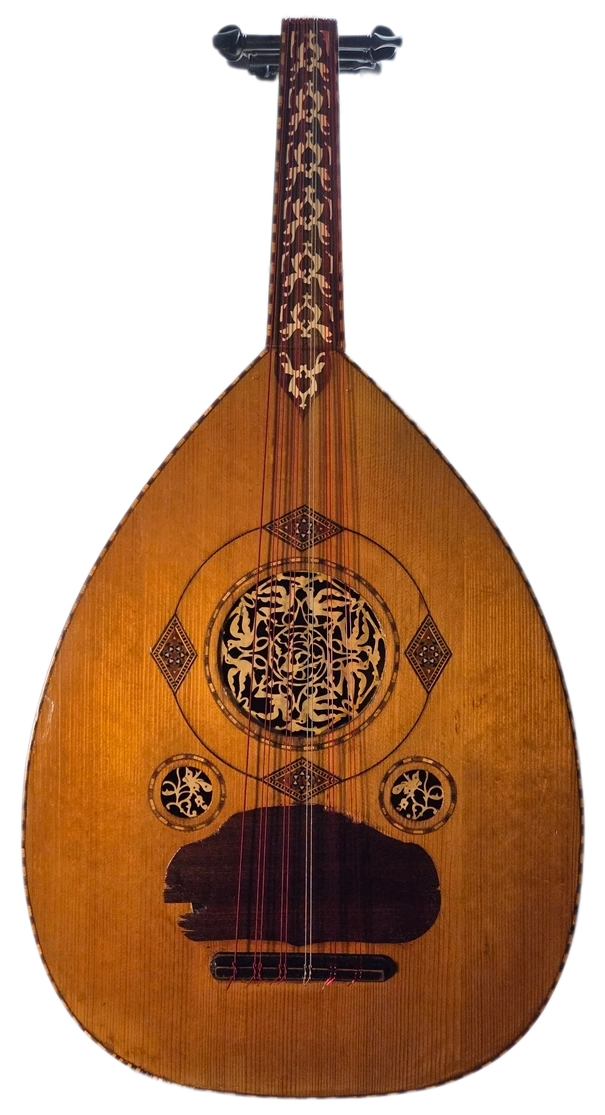
La Primera is the oldest instrument in the ANICETO archive - a Syrian or Lebanese Arabic oud built 1901, predating the oldest Spanish guitar in the collection by eight years. It is designated an Origin Instrument: it sits outside the flamenco guitar collection framework and is not evaluated against it.
La Primera is named not for the order in which it was acquired, but for its place in the lineage of the instrument itself. The oud came before the guitar and led directly to its development. Carried into Spain through the Moorish presence beginning in 711 CE, the oud became the lute, the lute became the vihuela, and the vihuela became the guitar. La Primera holds the origin of that entire lineage: the ancestral instrument from which every flamenco guitar in this collection ultimately descends. She did not come first to the steward. She came first to the tradition.
La Primera is structurally sound, with conservation ongoing. She remains capable of producing sound.
An interior inscription is partially visible via borescope. The date 1901 is consistent with Eastern Arabic numerals documented inside the bowl. The remainder of the inscription has not been read. Maker attribution is under active specialist review. This page will be updated upon confirmation. No attribution claim is made here beyond what the evidence supports.
The Oud and the Guitar
La Primera is not a flamenco instrument. It is what came before all of them. The oud, its route into Spain and what it left behind are the opening of the ANICETO University curriculum.
Instrument Record
| Name | La Primera · The First |
| Type | Arabic Oud · Syrian or Lebanese construction |
| Date | 1901 · Interior date inscription consistent with Eastern Arabic numeral 1901 |
| Maker | Under specialist review · Attribution not confirmed · Interior inscription partially legible via borescope |
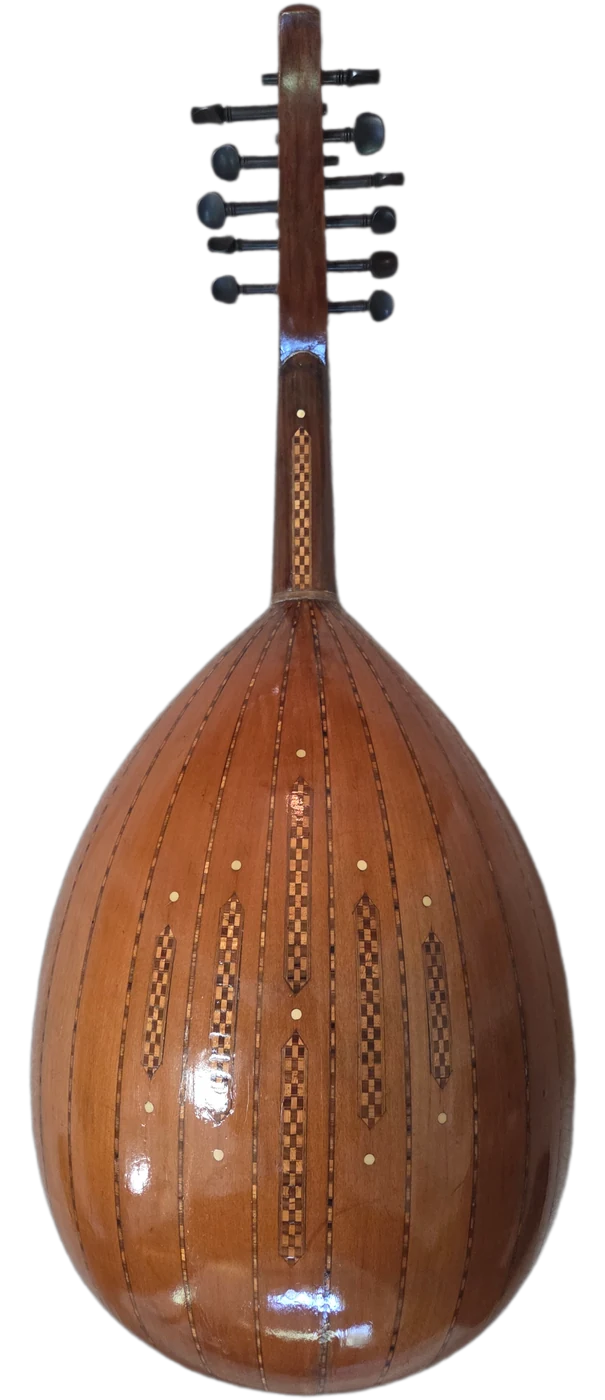
| Bowl | Apricot wood · Multi-stave construction |
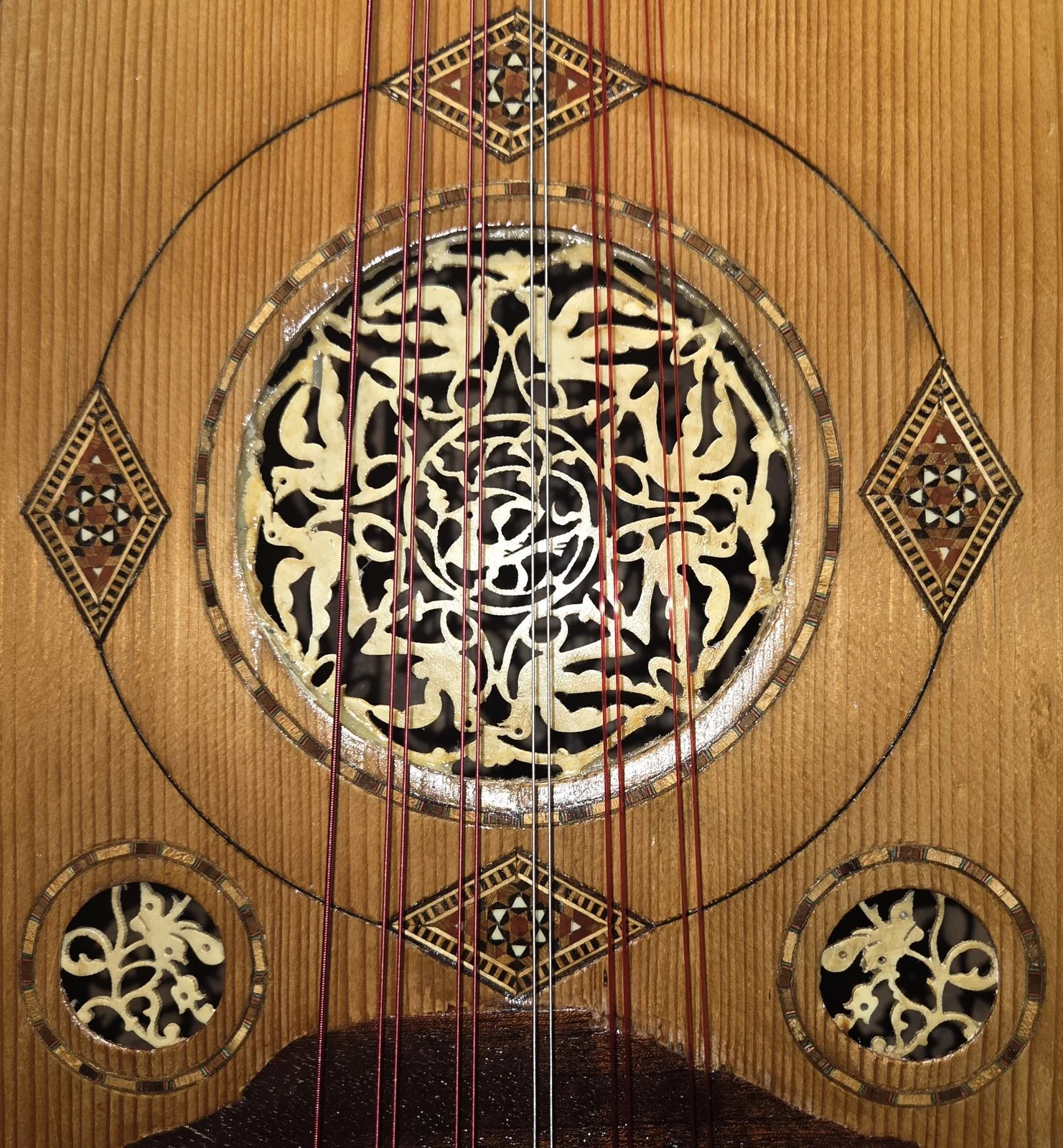
| Soundboard | Spruce or cedar · Three soundholes · Hand-carved bone openwork mandala rosette · Two flanking carved rosettes |
| Neck Inlay | Full-length bone arabesque · Ebony or walnut fingerboard |
| Bowl Inlay | Checkerboard stave marquetry · Bone dot inlays |
| Bridge | Glued construction · Maker attribution under active specialist review. Museum archival standard. |
The Oud Tradition
The oud is the primary melodic instrument of Arabic classical music - the instrument that medieval Arab theorists called the sultan of instruments. Its fretless neck allows microtonal inflection; its short, unstretched strings produce a warm, immediate sound that carries the maqam system of Arabic music with a precision that no fretted instrument can replicate.
Syrian and Lebanese oud making reached its highest expression in the late nineteenth and early twentieth centuries - a period when Damascus and Beirut were centers of instrument production for the entire Arabic-speaking world. La Primera was built at the beginning of that peak period. Its construction quality - the carved bone rosette, the full-length neck inlay, the stave marquetry - places it in the commission tier of that tradition.
The story of this instrument is in the curriculum.
The oud, its arrival in Spain, and the line that runs from it to the Spanish guitar are taught in Module 1 · The Guitar. 90 lessons across six modules, and this instrument sits in Module 6 · The Collection.
Explore the Curriculum