The Ramírez Dynasty
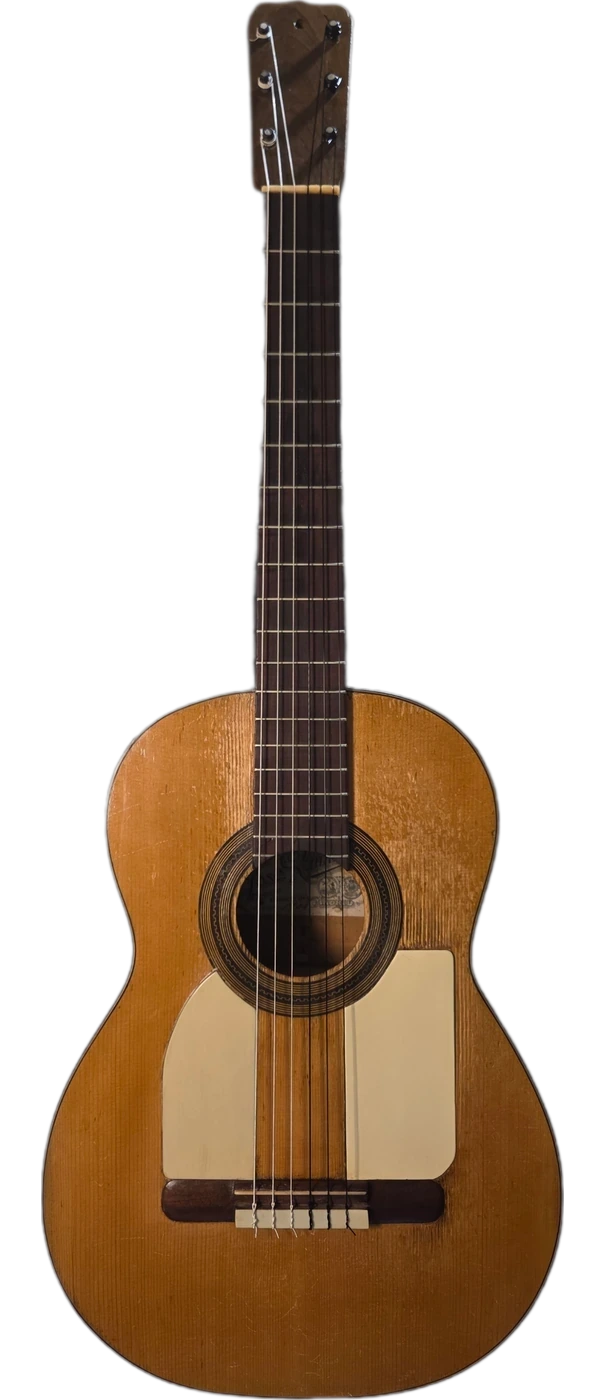
José Ramírez I founded his workshop at Concepción Jerónima Nº 2 in 1890. He built there until his death in 1923. His son - José Ramírez II, La Sanada's maker - inherited the address and the tradition. La Sanada was built in 1925: the second year of the son's independent stewardship, carrying his father's name and his father's address into a new era.
Ramírez I is credited in family documentation as a primary developer of the tablao guitar - a larger flamenco model built for projection in performance, derived from Torres but distinct from it. La Sanada is a direct descendant of that invention, built by the son of the man who made it.
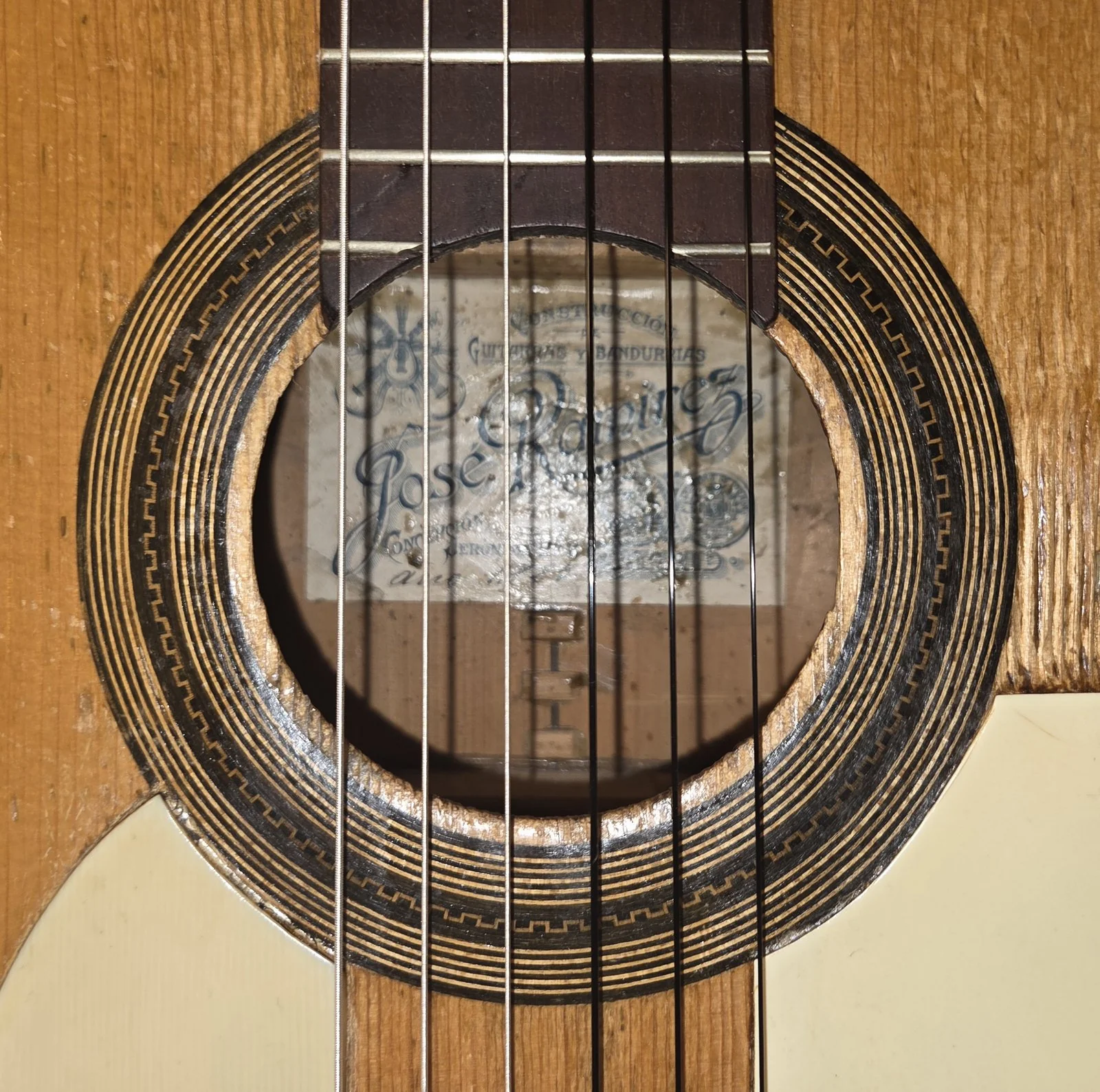
Period award stamps on the label confirm the guitar was exhibited and judged before it was played. What happened to it over the century that followed is a story in itself.
Madrid School Lineage
La Sanada sits at the center of the most documented maker lineage in Spanish guitar history. The full lineage context - who trained under whom, which workshops ran parallel, and where La Sanada sits in that map - is covered in the ANICETO University curriculum.
Instrument Record
| Instrument Name | La Sanada · The Healed One |
| Maker | José Ramírez II · Concepción Jerónima Nº 2, Madrid |
| Year | 1925 · Confirmed on label |
| School | Madrid · Ramírez dynasty second generation · Built two years after the death of José Ramírez I, the dynasty founder |
| Type | Flamenca Blanca · Tablao configuration |
| Top | Spruce |
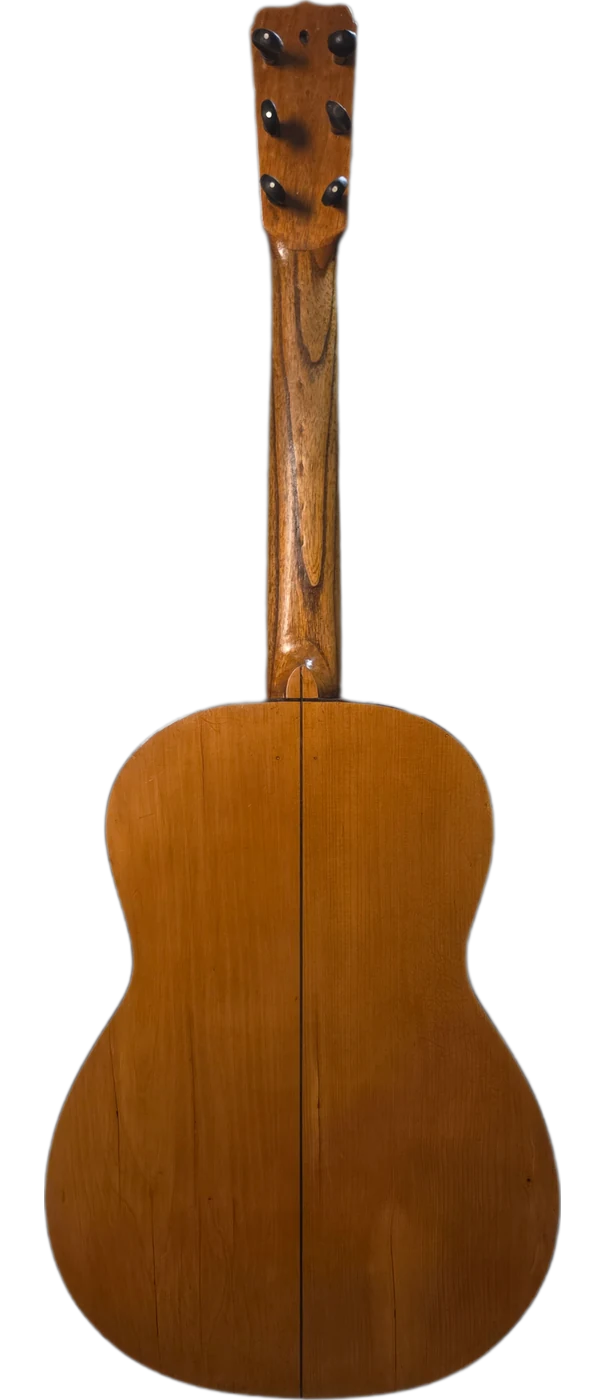
| Back & Sides | Cypress · Confirmed visual |
| Tuners | Original friction pegs |
| Collection Role | Pre-War Madrid Crown · Ramírez Dynasty Anchor |
Label confirmed. The instrument has been professionally inspected and conserved to museum standard. Interventions are documented and kept to the minimum the instrument requires. Its structural and provenance record is maintained privately under museum archival standard.
Tradition & Use
La Sanada was built as a professional performance instrument for the flamenco stages of Madrid between the wars. Instruments of this period and provenance rarely survive in playable condition. La Sanada does - conserved, structurally stable, and sounding.
The palos it was built for - soleá, seguiriya, the deep song forms of the Madrid tablao tradition - are the same palos it is capable of today. A century of use has not diminished what it carries.
The story of this guitar is in the curriculum.
Who built it. Who played it. Why this workshop, this year, this address. The wear knows how this guitar was held for a hundred years. It does not know whose hands. Module 1 teaches how to read the difference. 90 lessons across six modules, and this instrument sits in Module 6 · The Collection.
Explore the Curriculum