Manuel Reyes · The Córdoba School
Manuel Reyes Maldonado was born in Jayena, in the mountains of Granada province, in 1934, and moved to Córdoba as a boy. He opened his own workshop there in 1949, aged fifteen, and worked in that one city for the next sixty-five years. He called himself self-taught. In 1956 the guitarist Pepe Martínez introduced him to Marcelo Barbero in Madrid, who offered him a place at the bench. Reyes had a waiting list in Córdoba and went home. Barbero died that same year, and the influence is unmistakable in everything Reyes built afterward.
He built roughly twenty guitars a year from a shop on the Plaza del Potro, the square Cervantes names in Don Quixote, and assembled with hide glue long after most Spanish makers had moved on, which is why his instruments remain repairable a lifetime later. Vicente Amigo, Tomatito and Manolo Franco played his guitars. Specialists agree he changed at the end of the 1960s, and that what he built from 1970 bears little relation to what came before. El Callado was built inside that shift, not on either side of it.
Córdoba School Anchor
Manuel Reyes built in Córdoba for sixty-five years, and El Callado is the archive's sole representative of that school. The Córdoba tradition, and how a designation on a label is weighed as evidence, are covered in the ANICETO University curriculum.
Instrument Record
| Instrument Name | El Callado · The Silent One |
| Maker | Manuel Reyes · Plaza del Potro 2, Córdoba |
| Year | 1967 · Guitarra Tipo C |
| School | Córdoba · Sole school representative |
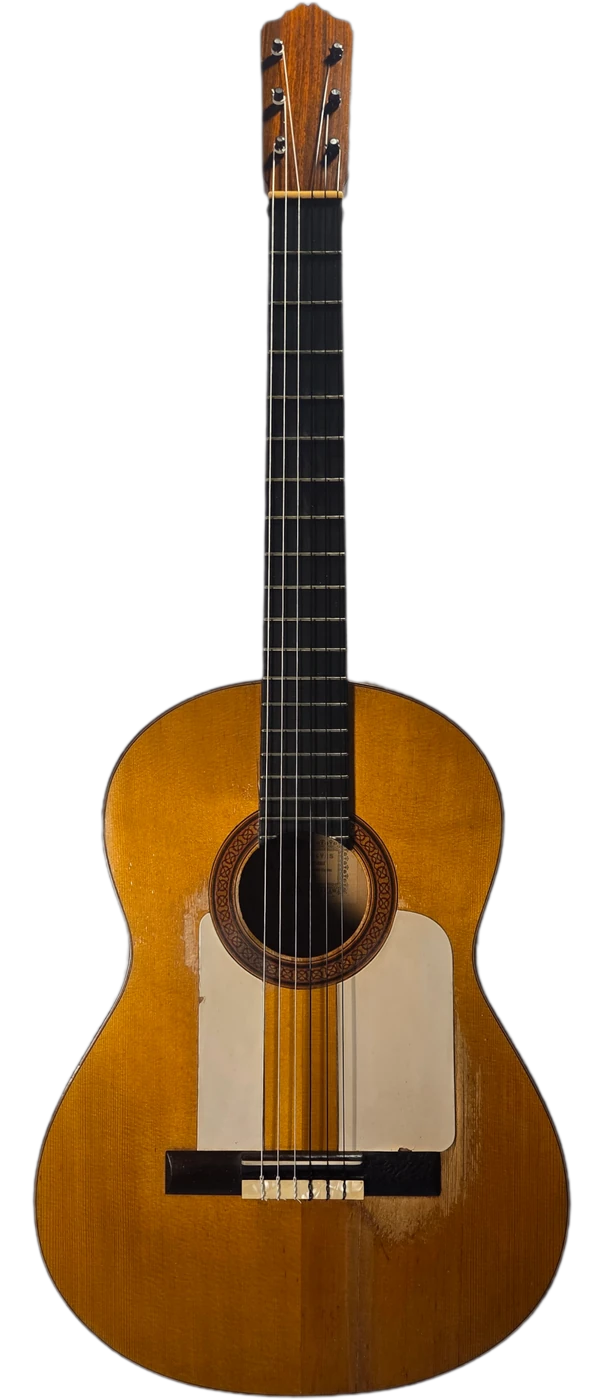
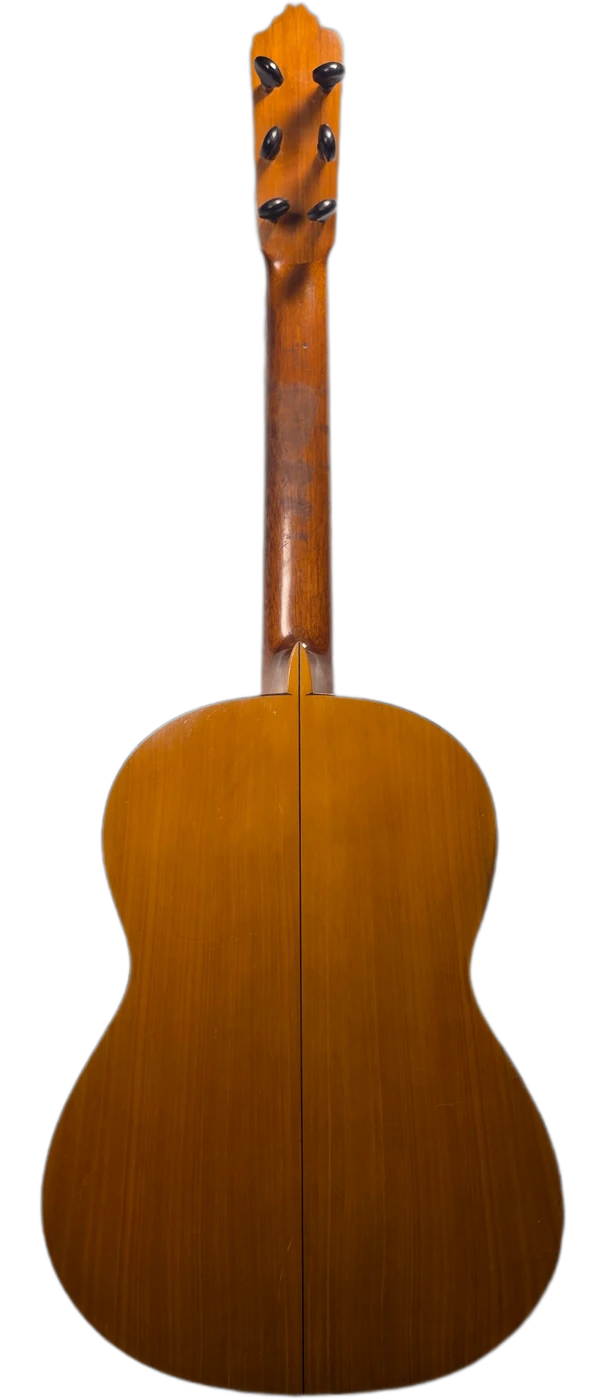
| Type | Flamenca Blanca |
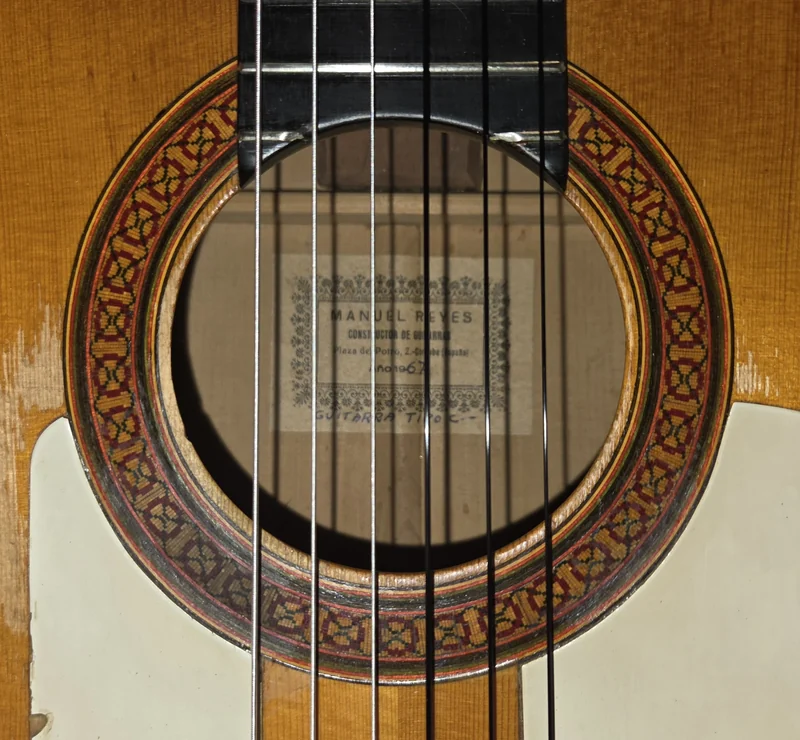
| Label | Printed maker, address and year form, completed by hand: Año 1967, Guitarra Tipo C |
| Collection Role | Córdoba Anchor |
The label's Tipo C designation is the one thing about this instrument that remains unexplained. It reads Año 1967, and beneath the printed border, in the same blue ink and the same hand, Guitarra Tipo C. Both were written when the guitar was finished, so the designation came from the workshop and not from a dealer afterward.
What it meant there is disputed. One account holds that Tipo C was a decoration and price tier created for the British importer Ivor Mairants, reducing duty on instruments entering the United Kingdom. Another holds that Reyes built Tipo C instruments himself through the 1960s to a plainer specification, leaving them unsigned, and stopped in the 1970s to concentrate on signed first-line work. Both trace to the same discussion among specialists, the participants do not agree, and neither account has been independently corroborated.
What the label establishes is narrower and firmer. The designation was written in Reyes's own workshop, at Plaza del Potro 2, in 1967. The rest is examined in the curriculum.
Label confirmed. The instrument has been professionally inspected and conserved to museum standard. Interventions are documented and kept to the minimum the instrument requires. Its structural and provenance record is maintained privately under museum archival standard.
Tradition & Use
Córdoba is a guitar-making city with its own line of descent, distinct from Granada to the south and Madrid to the north. Reyes built there for sixty-five years without leaving, and the Plaza del Potro workshop sat a few streets from the mosque-cathedral in the old city. His instruments are known for a bold attack and a percussive quality that flamenco singers and dancers preferred to a smoother, more classical response.
El Callado is the sole Córdoba representative in the archive, and the eleventh regional school to be held. It is also the only instrument here whose model designation remains unexplained, which is why it carries the name it does.
The story of this guitar is in the curriculum.
Córdoba as a making city, and what a maker's mark means when the record is incomplete. Module 1 teaches how to read a label as evidence rather than proof. 90 lessons across six modules, and this instrument sits in Module 6 · The Collection.
Explore the Curriculum